

How does an hour of time alone in pure silence sound?
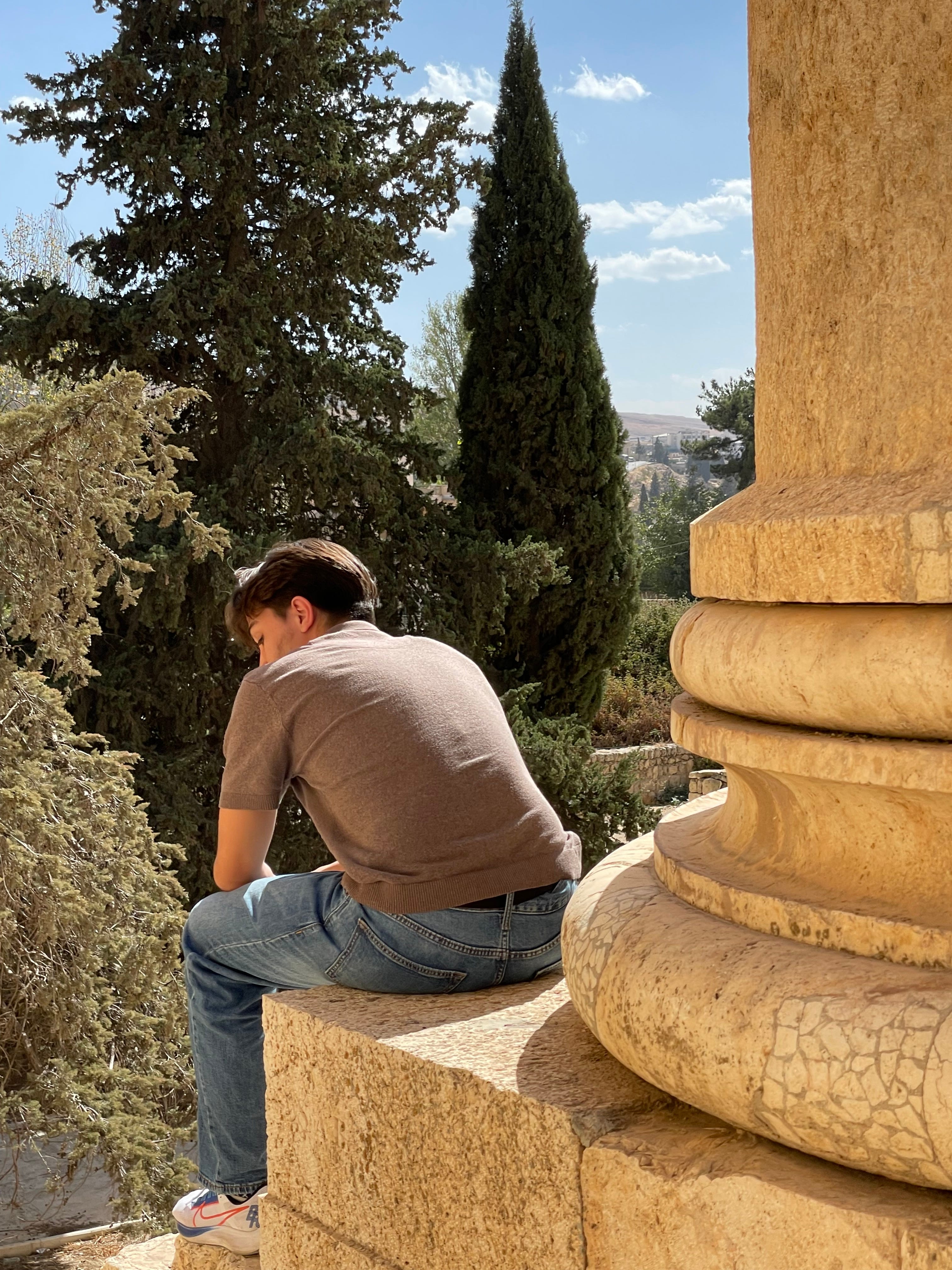
Respite? Vacation? Long awaited chance to exhale?
(Perhaps I should mention that we’re talking here about time alone, in silence, with only yourself. No phone, snacks, computer, book, newspaper, music.)
A group of Harvard students found sitting in silence so uncomfortable, that they chose a mild electric shock instead of continuing to sit in silence.1
Researchers from the University of Virginia asked a group of students to sit alone with their thoughts in a plain room for 6-15 minutes with nothing to do. Alarmingly (I believe), some participants were even given the option—and took it—to self-administer the shocks rather than just sit and think—even though previously they had said they would pay to avoid the shock.
The researchers concluded that, without training, the untutored mind does not enjoy unstructured introspection.
Maybe you’ve experienced the difficulty of being still yourself?
You breathe deep and exhale with a smile, but then thoughts begin to bounce off the walls of your brain with such a frenzy that you feel like there’s a professional racketball game going on up there.
You remember the clothes in the washer, or maybe the unmade bed.
Your stomach growls and you feel certain that if you don’t eat something right now, your blood sugar level just might plunge and take you along with it.
There’s barking down the street and you wonder why your neighbor hasn’t been walking the dog lately.
Then there are the errands to be done, the messages you forgot to respond to, that salt you didn’t pick up at the store…
But you stick with it—you learn to give a nod to those distractions and let them pass on. And while the whole time (be it 6 minutes or 60) might feel a bit like an exercise, you find that afterward there is something more settled inside than before—and you decide to keep at it.
When we get quiet, we find out what’s in our mind. We also become aware of what’s going on in our body. This non-judgmental awareness—mindfulness, is helpful for a whole host of things, including: stress-reduction, attention, emotional-regulation, well-being, and compassion.
But beyond mindfulness lies the fullness of solitude, the intentional spiritual practice of withdrawing from noise and distraction to be present with God. Mindfulness is valuable, but solitude offers a deeper, personal encounter with God, leading us to a place of stillness where we can better hear his voice and receive his love.
I’ve dabbled off and on with solitude since I was around 11 years-old and would climb a wispy eucalyptus tree up into the heavens and talk to God, sing a little bit, and then just absorb the view. It has always helped.
Now, longing for rest and for unwavering peace, I am compelled to weave the practice of solitude into the fabric of my daily life. I’ve been fairly consistent for a couple of weeks and I am grateful for the shared experiences of others who have struggled to be still, but found it to be crucial to living opposite to the anxious ways of the world at large.
If this is something you have experience with please consider sharing in the comments.
I will keep you posted.
May your efforts lead to rest and may your rest be sweet.
Alicia
Thanks for this most important post! This is a thing spoken of by the great mystics - it is one of our callings, contemplation. I can't find the source but one said something like, "Think of your thoughts as bees, bring them all back into the hive and they will make honey" (wisdom). As to how - this is one of the hardest things. Some ideas: make a place somewhere in your house where you always go to (the place itself begins to help with recollectedness), sit comfortably, not too comfortably (for me, cross-legged on a cushion with a wall behind), leave all technology far away, helpful to use an icon and candle, read some Scripture to focus, then a prayer like the Jesus prayer, to stay focussed on Him, repeated for a while, and then silence. If you fall asleep, that's OK, when you awake just return to Jesus, if you get distracted, that's OK, just return to Jesus. Have an alarm so you don't have to worry about the time. Have a piece of paper and pen to write down something you forgot you have to do or an insight so you can leave that to later.